Hello, I am Wert and welcome to my blog, I share pictures of chickens and crafts I make.
Friday, September 2, 2016
First Eggs!
Here are our chickens in the sandbox. They are scared of the camera.
Buff Orpington chickens in the sandbox. The close one is named Chicken Noodle Soup and the far one is named Big Buff.
These are two of our unnamed chickens. They are looking up at the camera. They do not see it very often.
We finally got eggs! The chickens first started about three weeks ago. Right now we are getting six eggs a day. The first chicken to lay was about 19 weeks old.
Friday, May 27, 2016
We moved the chickens outside finally!!! They dirtied up the bathtub so bad. We cleaned it up. The chickens have done great outside in their coop. We let them into the run just a couple days ago. At first they were timid, but now they love coming outside. Only our gray araucana doesn't.
The chickens absolutely love the deck. They like it more then the sandbox. Especially on days that it is raining.
Here are two pictures of chickens hanging out inside. A nice escape when everyone is outside.
I found out today that chickens really like beech tree leaves. They like them better than oak and maple. It is crazy.
This is the feeder. The chickens have to stick their heads inside the pvc pipe to get at the food. That makes it impossible for them to waste it. Trust me, YOU want to make this! They waste over 1/4 of their feed.
Thursday, May 19, 2016
This is a good chicken website. Here they will teach you everything you will need to know about raising chickens. From what kind of food to feed them, to chicken breeds that have feathers that stick strait out, what to do when you have no egg production, and ways to keep your chickens healthy.
The chickens are getting larger and more curious, I will make a post soon about moving them to the finished coop.
Thursday, March 31, 2016
The New Chicks
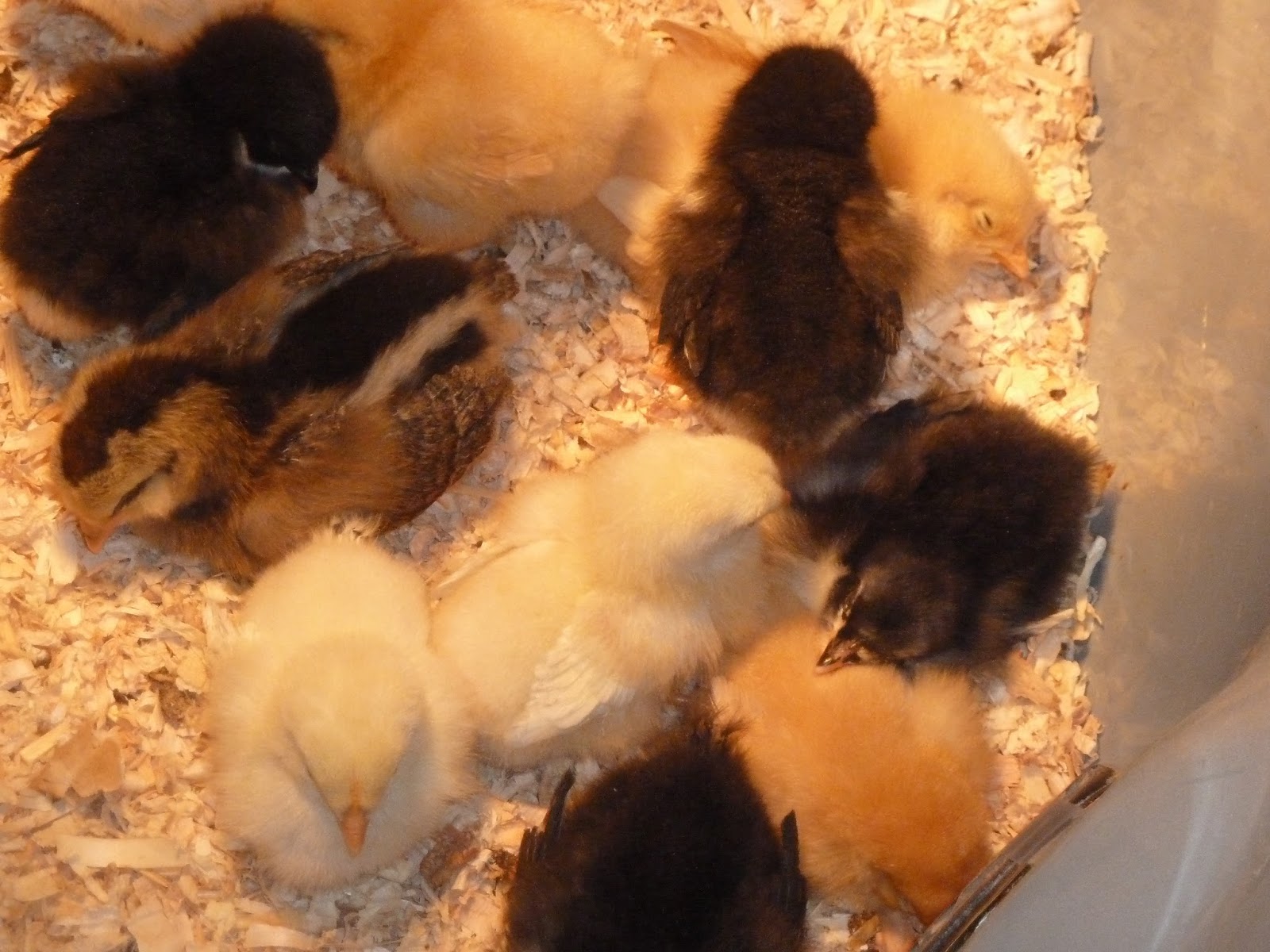
Here are the new chicks, they are all in the bathtub. We got 3 Black Australorps, 2 Jersey Giants, 3 White Leghorns, 3 Buff Orpingtons, and 2 Araucanas.
They love to eat and eat and eat.
And eat some more.
Then they go to sleep, if you see your chicks sleeping, do not be concerned. They are not sick, they are just resting.
Our Araucanas learned how to climb on top of the feeder and drinker. They were going to learn how to escape from the bathtub, so we made a cover for the top of the bathtub. (Picture below)
They can still fly on top of the feeder and drinker. We think that is important for them because they love to do it.
Tuesday, March 22, 2016
Changing Bathtub To Chick Brooder
We have this big huge bathtub in the master bathroom that we do not use at all. We need a safe place to put our baby chicks. So we are going to change this tub into a brooder.
We need to keep it safe in the bathtub so we are going to cover up the jets.
Pine shavings make a very soft bedding for chicks. Do not use cedar though, because it causes respiratory problems.
We cover the pine shavings with paper for the first day to teach them what food is.
| Me adjusting the heat lamp |
Here is the finished product.
Monday, February 29, 2016
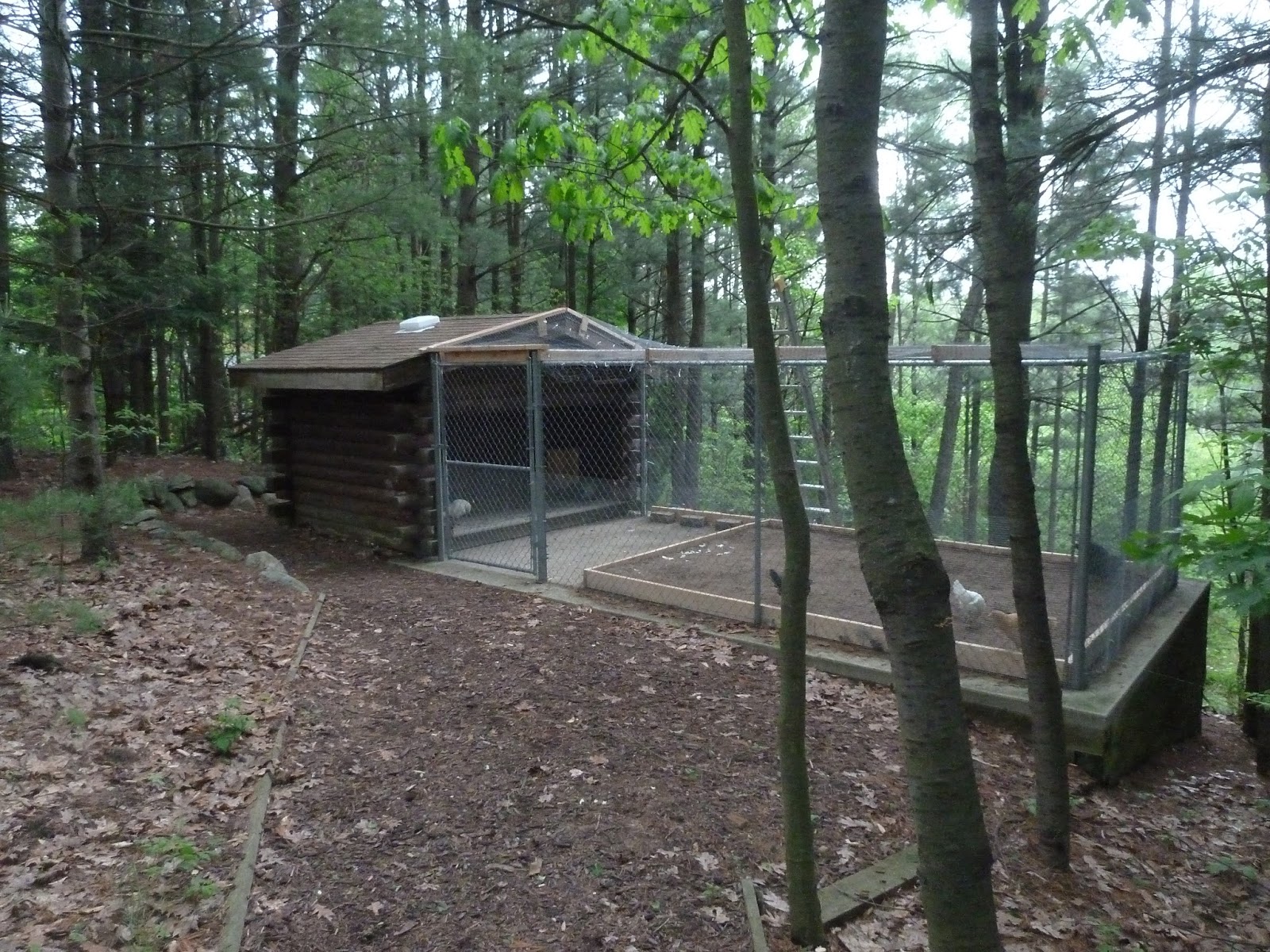
The New Coop
| The Coop |
| Wasted space behind wall? |
Friday, February 26, 2016
How Much Salt Does It Take To Float Different Things?
Introduction
Have you ever wondered how much better things float in saltwater? If you have, there is no more wondering to do, because we have wondered for you. We've done an experiment to see.
Materials
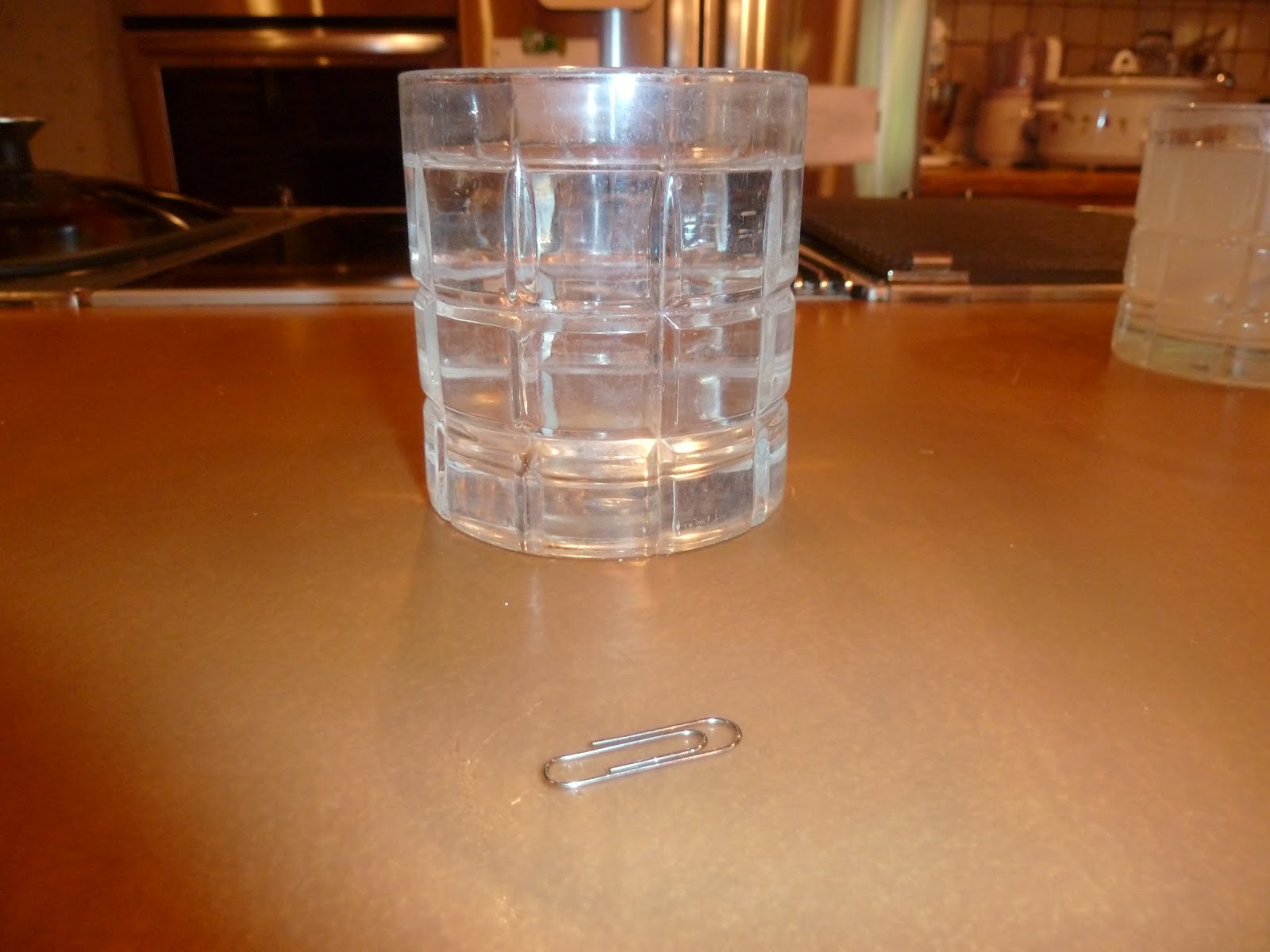
Lots of room temperature water, a cup, a one cup, a teaspoon, glass marble, metal marble, ice cube, dime, quarter, salt, almond, grape, aluminum foil, paper clip, and a spoon to stir with
Hypothesis
To float a marble, it will take 15 tsp of salt. To float an ice cube, it will take 13 tsp. To float a metal ball, it will take 20 tsp. To float a dime, it will take 5 tsp. To float a quarter, it will take 10 tsp. To float an almond, it will take 5 tsp. To float a grape, it will take 3 tsp. To float a paper clip, it will take 15 tsp. To float a piece of crumpled up aluminum foil, it will take 3 tsp.
Procedure
1. Fill your glass with one cup of water.
2. See if the glass marble floats. If it doesn’t, add a tsp of salt to the glass, and stir it in. Does it float now?
3. Continue putting salt in your glass until it floats. Some things will not float at all.
4. Do this with all of your items. Wash out the cup between each one.
5. How many tsp of salt did it take for each item to float?
6. Record your results.
Results
Aluminum foil, hypotheses 3 tsp, actual 5 tsp
Almond, hypothesis 5 tsp, actual 4 tsp
Grape, hypothesis 3 tsp, actual 4 tsp
Glass marble, hypothesis 15 tsp, actual, no floater – salt stopped dissolving at 12 tsp
Metal marble, no floater, hypothesis 20 tsp
Dime, no floater, hypothesis 5 tsp
Quarter, no floater, hypothesis 10 tsp
Paper clip, no floater, hypothesis 15 tsp
Ice cube, 0 tsp, already floats
Conclusion
It turned out my hypothesis was wrong, I was very close with the almond and the grape though. Most of the things didn’t even float at all. Next time, I could start with salt and add water. Then everything would float. Maybe I could do even more ingredients like corn, beans, or chocolate. I could even add sugar to the water, and see if I get different results.
| Experiment View |
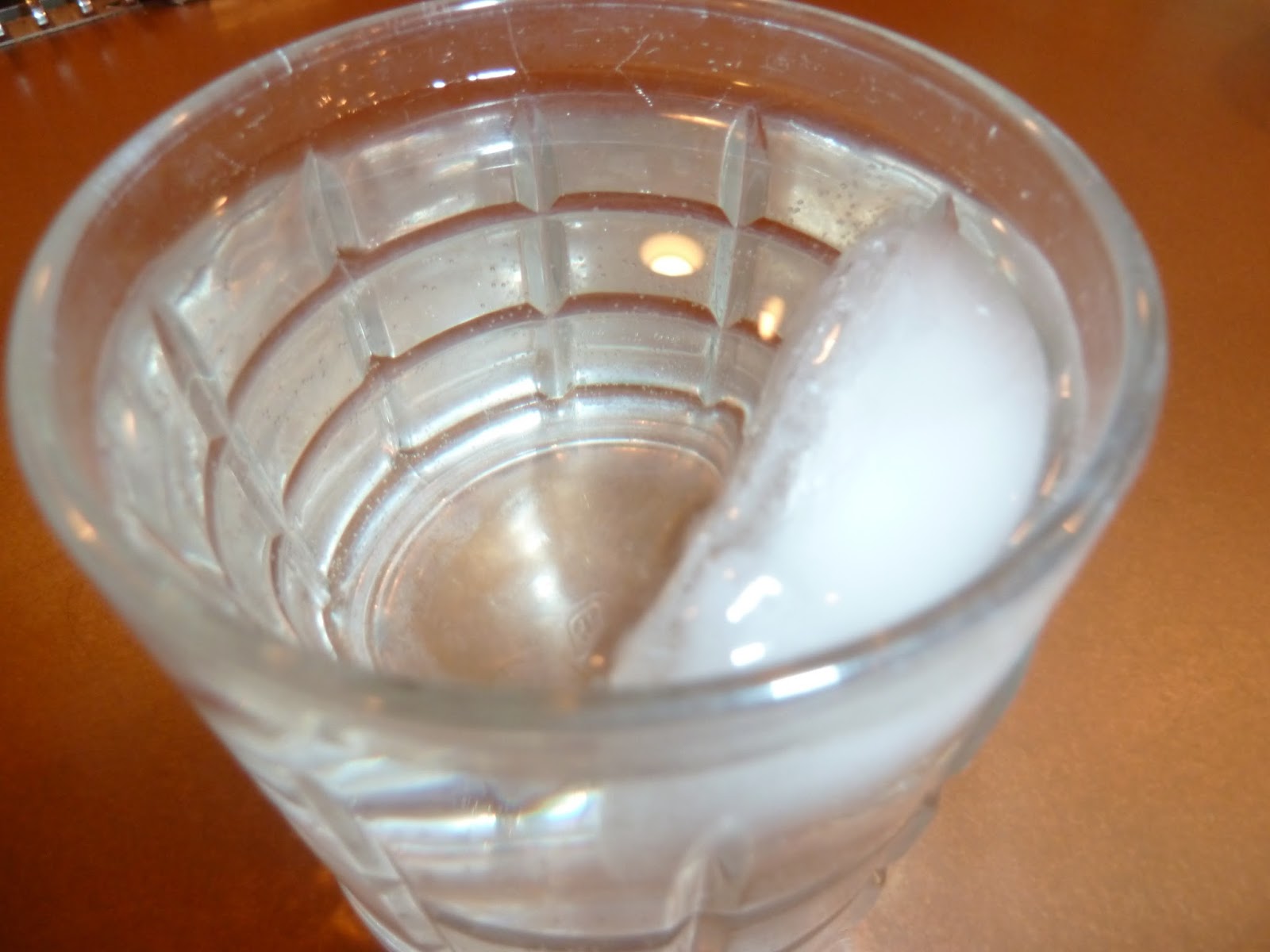
| Ice Cube Before Testing |
| It Already Floats |
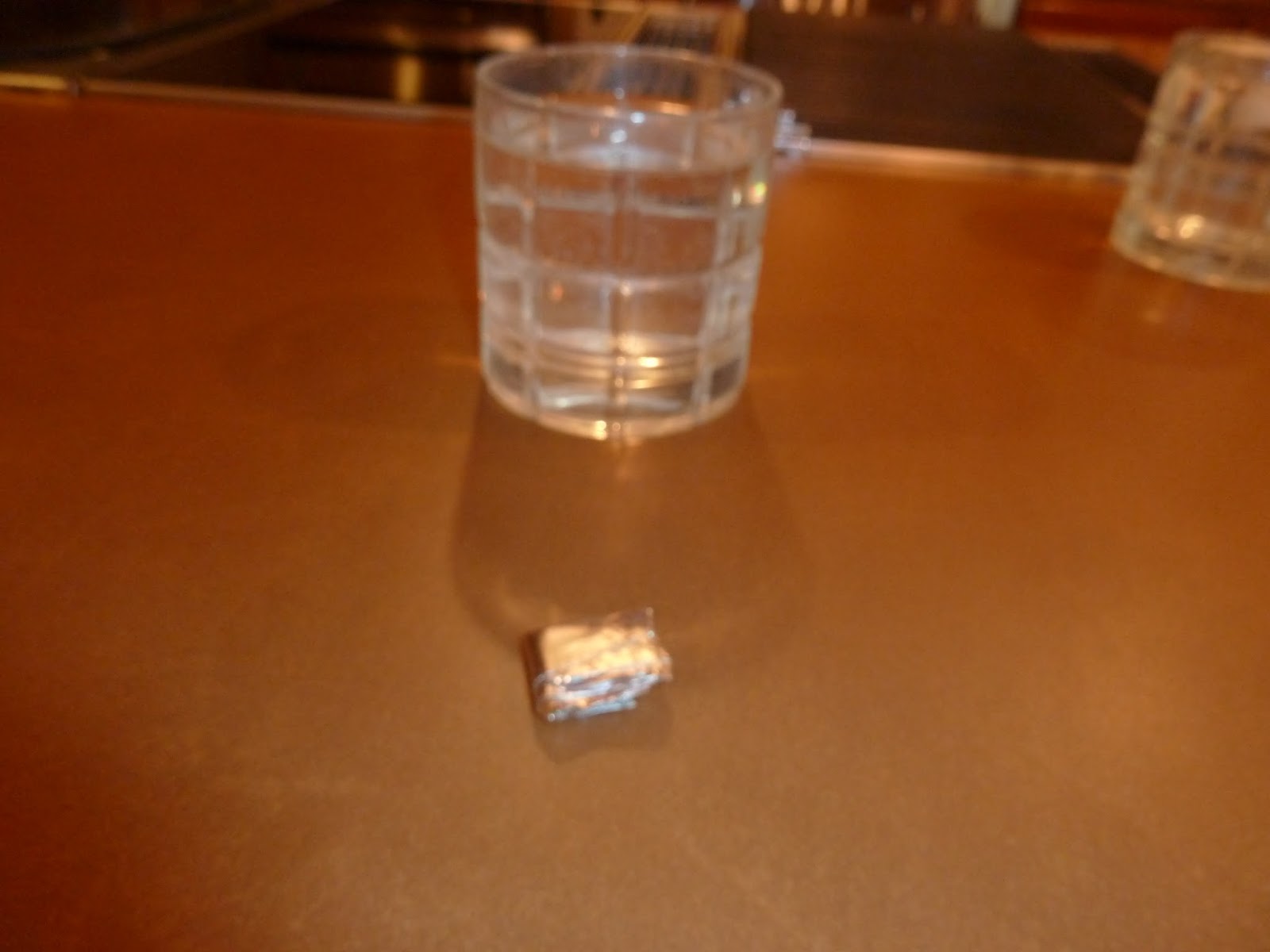
| Aluminum Foil Before Testing |
| It Sinks |
| It Is Now Floating Because Of The Salt |
| Almond Before Testing |
| It Sinks |
| It Floats Now |
| Grape Before Testing |
| It Sinks |
| It Floats Now |
| Paperclip Before Testing |
| It Sinks |
| It Still Sinks |
| Metal Ball Before Testing |
| It Sinks |
| It Still Sinks |
| Dime Before Testing |
| It Sinks |
| It Still Sinks |
Subscribe to:
Posts (Atom)